
Commercial Sheet Vinyl Flooring
A Durable and Versatile Solution
Types of Commercial Sheet Vinyl
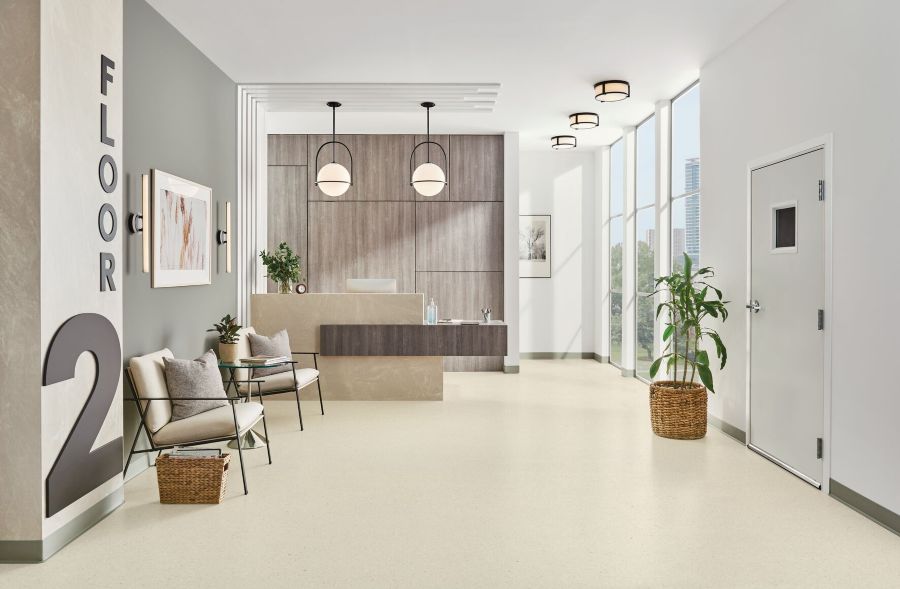
There are two main types of commercial sheet vinyl flooring: homogeneous and heterogeneous. Homogeneous sheet vinyl features a single layer of material using the same content from top to bottom. As a result, its color runs throughout the entire thickness of the material. Although this limits the design options for homogeneous sheet flooring, it improves its wear resistance compared to heterogeneous flooring. Conversely, heterogeneous sheet vinyl includes multiple layers: a UV layer, a wear layer, a printed layer, a glass fiber layer, and a backing layer. The printed layer lets manufacturers create patterns and designs that mimic natural materials such as wood or stone. The Concepts of Landscape collection from AHF Contract® is a good example of the design range the printed layer enables. For a deeper look at how the two constructions compare and which one fits your project, see our guide to heterogeneous vs. homogeneous sheet vinyl.
Thickness and Wear Layer: What to Look For
Whichever construction you choose, thickness and wear layer are essential considerations for commercial sheet vinyl flooring. Thicker flooring typically lasts longer and is more durable in a commercial environment. The wear layer determines protection against scratches, scuffs, and stains. For example, higher-end commercial vinyl sheet flooring has a wear layer of 20 mils (20/1000 of an inch) or more. Surface protection matters as much as the wear layer beneath it. That’s why AHF Contract sheet vinyl features HartGuard™ Ultrashield, its breakthrough coating system. The system delivers best-in-class performance, providing ultimate protection, easy cleanability, and superior resistance to scratches and stains. The net is lower maintenance effort and costs.
Benefits of Commercial Sheet Vinyl Flooring
Sheet vinyl earns its place in commercial buildings on performance.
1. Durability That Handles Rolling Loads
Commercial sheet vinyl is highly durable and long-lasting, with some products lasting up to 20 years. That durability extends beyond foot traffic. Sheet vinyl withstands rolling loads from carts, dollies, wheeled equipment, and office chairs without denting or scarring. That’s why it holds up in spaces where heavy items move across the floor all day. Its longevity makes it cost-effective for businesses seeking a long-term flooring solution.
2. Low Maintenance
Commercial sheet vinyl flooring is low maintenance. Unlike other flooring types requiring more involved care, you can easily clean it with a damp mop. Moreover, commercial sheet vinyl doesn’t require waxing or polishing like other commercial flooring types. This saves time and money on maintenance.
3. Underfoot Comfort and Acoustics
Sheet vinyl is comfortable underfoot and quiet. Its resilient backing provides a cushion that reduces fatigue for employees who stand for long hours, and it dampens noise in busy, open spaces. In environments where staff are on their feet all shift, such as hospitals, restaurants, and retail floors, that comfort is a daily, felt benefit.
4. Design Versatility
You can customize the flooring to fit your aesthetic needs. For example, you can create the look of hardwood flooring or use a bold, colorful pattern to make a statement. You can also waterjet cut sheet vinyl to create different designs and shapes. That level of versatility adds to its growing popularity.
5. Fast, Clean Installation
Commercial sheet vinyl is relatively easy to install. Typically, standard rolls are 72 inches wide, which covers a significant area when rolled out, though they can be cumbersome to work with. This makes installation fast, reduces seams, and creates a cleaner overall look. In addition, there are no ends or joints, unlike tile and plank flooring products. Vinyl welding rods create durable, watertight, and visually seamless floors. They effectively turn individual sheets into one continuous surface. That prevents dirt and grime buildup, improving hygiene.
6. Affordability
Commercial sheet vinyl flooring is more budget-friendly than stone, wood, or tile, offering a mid-tier price point. You can install quality flooring that withstands heavy traffic without breaking the bank.
Healthcare Facilities Routinely Look to Commercial Vinyl Sheet Flooring
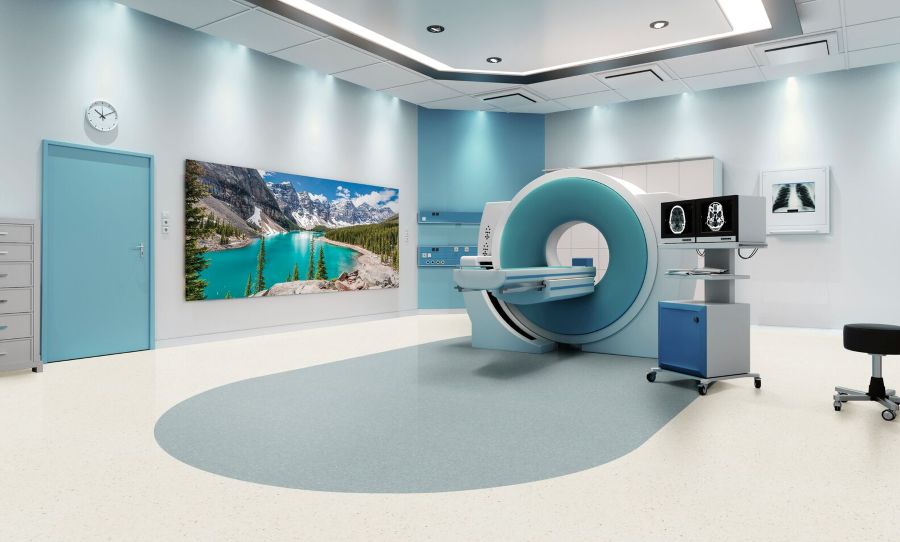
Commercial sheet vinyl is routinely used in healthcare facilities for operating rooms, ICUs, patient rooms, corridors, and labs. These environments demand flooring that’s easy to clean and slip-resistant. They also require flooring that can withstand constant foot traffic and heavy rolling loads from hospital beds, IV stands, and diagnostic equipment. Healthcare is also the fastest-growing segment. Mordor Intelligence identifies commercial healthcare facilities as the fastest-growing flooring end-use segment in the U.S. It’s projected to grow 6.75% annually through 2031, driven by outpatient expansion, urgent care, and medical office construction. Notably, the same research notes that clinical spaces emphasize homogeneous sheet flooring for infection control.
Sheet Vinyl Provides Superior Infection Control for Healthcare
Sheet vinyl has excellent infection-control properties, which are critical in healthcare settings. It has significantly fewer seams than tile or plank products. You can also heat-weld any seams shut. The sheet can also be flash-coved by turning it up the wall several inches to form an integral base. That eliminates the floor-to-wall joint where contaminants collect.
“Infection control comes down to eliminating places for pathogens to hide. Heat-welded seams and flash-coved edges create a truly monolithic surface. There are no grout lines, no open seams, no floor-to-wall crevice. There’s nowhere for moisture or bacteria to penetrate, and the floor withstands the repeated disinfection required by healthcare protocols.” — Olga Rivas, Senior Research Scientist, AHF
The Facility Guidelines Institute (FGI) recommends monolithic or seamless flooring for critical areas like operating rooms and ICUs. Heat-welded sheet vinyl meets that criterion. It dramatically improves sanitation and infection control. Daily disinfection is part of that equation. Healthcare floors are repeatedly exposed to aggressive cleaners as part of routine infection-control protocols. Sheet vinyl is engineered to withstand that regimen without staining or degrading. HartGuard™ Ultrashield further reinforces this with superior stain resistance and easy cleanability.
Other Businesses Increasingly Turn to Commercial Sheet Vinyl
Not surprisingly, other commercial sectors have recognized the benefits sheet vinyl has long provided for healthcare operations. Hygiene expectations have permanently risen everywhere the public gathers. What was once a healthcare-specific requirement is now the standard. As a result, commercial sheet vinyl is growing in popularity across education, hospitality, retail, and corporate settings.
Education
Schools use sheet vinyl in cafeterias, restrooms, corridors, and science labs. These spaces handle constant spills, chemical exposure, and heavy student foot traffic. Fast installation also matters here, since schools typically have narrow summer windows to complete flooring projects.
Hospitality and Retail
Hotel lobbies, corridors, grocery aisles, and back-of-house areas all need flooring that looks good under scrutiny and survives punishing traffic. Sheet vinyl delivers both, which is why it keeps showing up in spaces where design and durability used to force a trade-off.
“Sheet vinyl gives designers room to work. A hotel corridor doesn’t have to look institutional. A retail floor doesn’t have to sacrifice performance for personality. The design conversation and the performance conversation used to be separate. With today’s sheet products, it’s the same conversation.” — Marcia Fortley, Marketing Manager, AHF
Corporate
Offices increasingly specify sheet vinyl for breakrooms, kitchens, and multipurpose spaces. Anywhere moisture, spills, and rolling chairs would punish carpet or hardwood. Across all of these sectors, the fundamentals hold:
- Durability for high traffic
- Moisture resistance for wet areas
- Slip resistance for safety
Sheet vinyl offers a durable, design-forward flooring option with cost savings vs. other resilient options like LVT.
Installing Commercial Sheet Vinyl
Commercial sheet vinyl requires full-spread or perimeter gluing to perform correctly under heavy commercial use. Before installing any sheet vinyl, you must properly prepare the subfloor. It must be clean, level, and free of debris. Properly preparing the subfloor is critical, or imperfections will be noticeable after installation. Bumps can also cause wear. If the subfloor isn’t level, you may need to level it or use a self-leveling compound. Once your subfloor is level, you can roll out the sheet vinyl to fit the space. Although it’s sometimes forgotten, leave sheet vinyl to acclimate to room temperature for at least 24 hours before installation. Always check the manufacturer’s installation guides to ensure you install the product accurately. 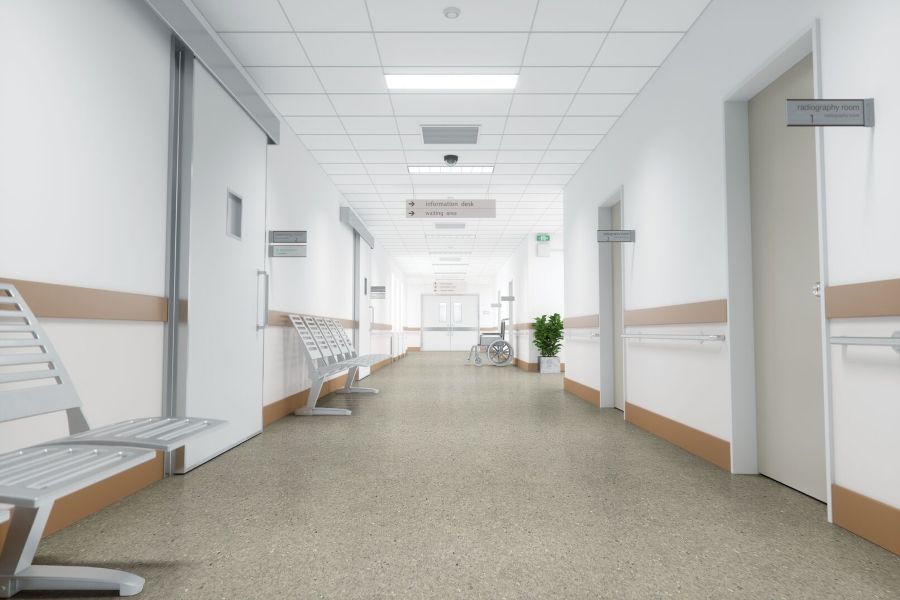
Maintaining Commercial Sheet Vinyl Flooring
Facilities love sheet vinyl for its almost maintenance-free properties. Just sweep or vacuum regularly to remove dirt and grit that can scratch the floor. Wipe up spills promptly. You can also damp-mop the flooring with a mild, pH-neutral floor cleaner as needed. Avoid harsh chemicals or abrasive cleaners that can damage the flooring. Look for surface protections like HartGuard™ Ultrashield, as they do much of the maintenance work for you. The coating resists scratches and stains that would otherwise require aggressive cleaning. That keeps routine care simple and maintenance costs down over the floor’s life. You can add some years to the flooring’s life by taking some added precautions:
- Consider placing mats at entryways to reduce grime buildup and tracking in debris that can scratch the surface
- Use pads underneath the furniture to avoid denting or scratching
- Use furniture glides if you have to move any office furniture.
Equally important, you’ll never have to polish commercial sheet vinyl flooring. So you won’t have to worry about spending significant money on flooring maintenance.
Talk to AHF Contract™ About Your Commercial Flooring Needs
We’re experts in commercial vinyl flooring, with a performance-focused lineup that includes:
- Sheet vinyl
- Luxury vinyl tile
- Vinyl composition tile
Get the insights you need to make your next commercial flooring project a success. Call 1-866-243-2726 to talk with one of our representatives.