
Commercial Luxury Vinyl Tile Flooring: The Ultimate Guide
May 6, 2026 | By AHF Contract® Flooring Experts
Commercial luxury vinyl tile (LVT) now accounts for more than half of the U.S. vinyl flooring market. That kind of dominance doesn’t come from aesthetics alone.
It comes from performance.
Commercial interiors ask more from a floor than most materials can deliver. Constant traffic. Rolling loads. Aggressive cleaning. Tight turnover windows.
LVT became the category leader because it handles those demands while giving designers the visual flexibility they want.
This guide explains why that matters and how to specify it correctly in real-world commercial environments.
What is Commercial LVT?
Commercial LVT is a high-performance, multi-layer flooring system designed for heavy traffic, easy maintenance, and long-term durability in commercial environments.
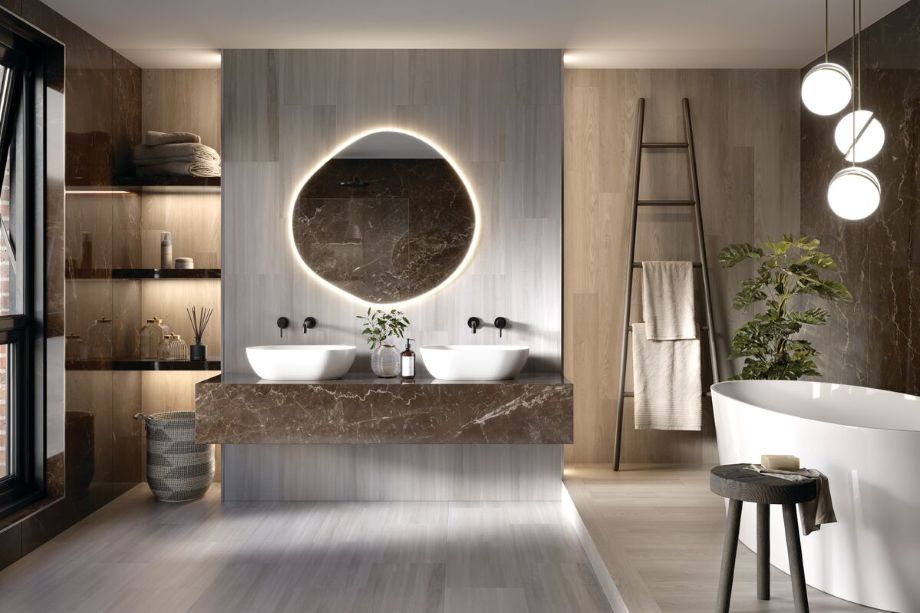
Key Takeaways
Before you go further, here’s the short version:
- Commercial LVT is engineered for heavy traffic, frequent cleaning, and demanding day-to-day use
- It delivers the visual language of wood, stone, and natural materials with a more practical performance profile
- Wear layers, surface finishes, core construction, and installation method all shape how the floor performs long-term
- Glue-down installation remains the leading choice for high-traffic commercial environments
- The category grows because it solves a real tension: spaces that need to look refined and function reliably rarely had a single material that could do both
What Commercial LVT Actually Is?
Commercial luxury vinyl tile flooring is a multi-layered resilient flooring product. It delivers the look of natural materials with the durability and easy maintenance that commercial spaces demand.
That definition is accurate, but it undersells the product.
Spaces with constant foot traffic. Rolling carts. Daily mopping. Tight turnover windows. Facility managers who don’t want drama. Design teams that refuse to sacrifice aesthetics just to hit a performance spec. That’s where LVT performs best.
LVT Accounts for Nearly 52% of the Commercial Vinyl Market
It comes in tile and plank formats, which is why you hear it referred to as LVT or LVP. The acronyms vary. The value doesn’t.
According to market analysis from Mordor Intelligence, luxury vinyl tile accounted for 51.67% of the U.S. commercial vinyl flooring market in 2025. It’s projected to grow at 9.65% CAGR through 2031. Categories that grow at that rate aren’t chasing a trend. They’re meeting sustained demand.
That level of adoption reflects more than preference. It reflects performance.
Commercial LVT vs. Residential LVT: Why the Distinction Matters
A residential floor and a commercial vinyl floor can look nearly identical in a sample chip. Put them in a busy corridor or a retail entry, and the difference becomes obvious within months.
To understand the importance of selecting a commercial grade, read Specifying Luxury Vinyl Tile: Why Commercial Grade Matters.
Commercial vinyl flooring handles what the standard residential version can’t:
- Heavier traffic
- More frequent cleaning
- Rolling loads
- Greater wear over time
Commercial vs. Residential Luxury Vinyl Tile
| Factor | Commercial LVT | Residential VT |
| Wear Layer | 20 mil+ for heavy-duty use | Typically 6–12 mil |
| Traffic Rating | Heavy commercial | Light to moderate |
| Rolling Load Resistance | Engineered for carts, equipment | Limited |
| Finish | High-performance, scratch/scuff-resistant | Standard protective coat |
| Installation | Glue-down preferred for stability | Glue-down preferred for stability |
| Indent Resistance | Required performance spec | Required performance spec |
Commercial grade isn’t a marketing phrase. It describes a floor built for a fundamentally different type of use.
“In commercial interiors, the floor has to perform every single day, not just impress at installation. You can have the most beautiful product in the sample library. But if the wear layer, finish, and installation system aren’t matched to the demands of the space, you’ll be dealing with complaints long before the warranty clock matters.”
— Marcia Fortley, Marketing Manager Commercial, AHF.
How Commercial LVT Is Built
Commercial LVT durability comes from how it’s constructed. Each layer directly affects how the floor performs over time.
Surface Finish
The top coating protects the floor during daily use and largely determines how easy it is to keep clean. Finish quality varies significantly across products and drives real differences in long-term appearance retention.
Wear Layer
This clear protective layer sits just below the finish. It handles the daily physical punishment of commercial life: foot traffic, furniture, carts, cleaning equipment, and abrasion.
For demanding commercial use, 20 mil is generally the minimum threshold. Heavy-duty applications go higher. The wear layer is the most useful single specification point when evaluating commercial LVT products.
Design Layer
A high-definition image layer that produces a visual of wood, stone, concrete, or other natural materials. Modern design layers use photographic realism and variable pattern technology to reduce visual repetition across large installations.
Core Layer
The structural foundation of the product. Core construction affects dimensional stability, acoustics, comfort underfoot, and the floor’s response to rolling loads and point pressure.
Backing Layer
The bottom layer contributes to stability, subfloor adhesion, and overall performance. No single layer makes a commercial floor. The specification conversation should always address the full system.
Why LVT Became the Specification Standard
Commercial LVT became a category leader by closing a gap that every specifier, designer, and facility manager recognized.
For years, the choice in commercial interiors was simple. Choose materials that looked the way you wanted but ended up creating maintenance headaches. Or choose materials that held up but compromised the aesthetic.
LVT stepped into that gap and made fewer people compromise.
It Looks Better Than It Used To
Modern commercial LVT produces realistic wood, stone, and natural material visuals through high-definition image layers, refined embossing, and variable surface textures. The pattern repeat problem that plagued earlier products is largely solved.
Realism matters beyond aesthetics. Natural visual cues shape how occupants experience a space. For instance, a floor that reads as warm wood or calm stone changes a room’s emotional register.
It Performs Where Natural Materials Struggle
Hardwood is reactive to moisture, susceptible to scratching under commercial traffic, and demanding to maintain. Stone looks extraordinary and costs accordingly, in material, installation, and ongoing care.
LVT interprets the aesthetic of both without inheriting the performance liabilities. In healthcare, that means a floor that handles cleaning chemicals without degrading. In education, it survives students, rolling carts, and whatever gets dropped on it.
It Simplifies Maintenance
Most commercial luxury vinyl tile flooring doesn’t require stripping, waxing, or sealing. Regular cleaning with appropriate products is generally sufficient. That simplicity has direct financial value. It delivers lower maintenance cost over the life of the floor, which is a legitimate specification argument, not just a convenience.
It Handles Moisture
Commercial LVT is manufactured from non-porous vinyl composite, which means the product itself doesn’t swell or warp when it encounters water. One important nuance: a waterproof product doesn’t create a waterproof flooring system. Seams, adhesive performance, and subfloor moisture conditions still matter. Plan the system, not just the product.
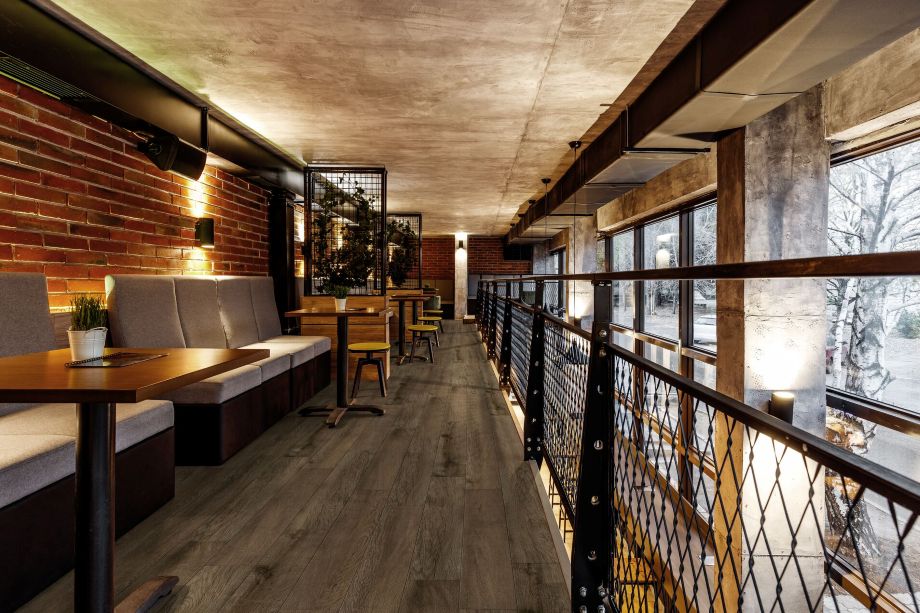
Where LVT Performs Best
Commercial LVT performs well across many environments, but it consistently shows up in spaces where you can’t compromise on performance:
- Healthcare
- Retail
- Workplace
- Hospitality
- Education
These environments have one thing in common. The floor doesn’t get a break.
What Actually Makes Commercial LVT Flooring Durable?
Commercial LVT flooring performs well in environments where durability, cleanability, and long-term appearance all matter.
Durability is one of the most overused words in flooring. In commercial LVT, it isn’t one feature. It’s the result of how the entire system performs under stress. That’s the condition commercial LVT must handle.
The Wear Layer Benchmarks That Matter
In commercial applications, the wear layer is the primary specification checkpoint. The 20-mil threshold is widely cited as a threshold for demanding use, but context matters.
A healthcare corridor with rolling medical equipment asks more from a floor than a private office. Thicker wear layers combined with high-performance finishes extend the period during which a floor retains its original appearance.
Indent Resistance
Commercial spaces carry concentrated loads:
- Office chairs on casters
- Medical equipment
- Food-service carts
- Retail fixtures
Products with less than 2% residual indent and static load resistance above 3,000 psi can handle genuinely demanding environments. These are the numbers worth asking for, not just a general commercial classification.
Surface Finish Performance
The finish layer works in close partnership with the wear layer. A high-performance finish enhances scratch, scuff, and stain resistance and directly affects how easy the floor is to clean and maintain over time.
If you want to see how these performance factors come together in a real commercial product, look at Nod to Nature™ USA commercial LVT. It includes a proprietary, factory-applied finish, EverNu™.
It delivers superior resistance to scratches, scuffs, and stains. The flooring also offers exceptional static and dynamic indent performance:
- Less than 2% residual indent
- Over 3000 psi static load resistance
What that means in practice: the floor holds its shape, resists visible wear, and maintains its appearance longer under real commercial use.
The AHF Contract® product addresses the growing demand for the calming effects of biophilic design without sacrificing the performance credentials required for a commercial project.
“Today’s LVT gives designers real creative latitude. You can bring the warmth and texture that a healthcare waiting room or a workplace lounge actually needs without giving up the indent resistance, cleanability, and maintenance performance the project demands. That used to require tradeoffs. It increasingly doesn’t.”
— Oxana Dallas, Principal Designer Commercial, AHF.
Commercial LVT performs because its construction, finish, and installation system work together.
How to Get More From LVT in Commercial Design
Specifying the right product is half the job. The other half is using it well. Commercial LVT flooring offers genuine design flexibility. The decisions you make around layout, pattern, zoning, and texture have real consequences for how a space reads and how the floor holds up.
Laying Patterns and Visual Scale
Standard staggered installation is reliable and widely used, but it’s not the only option.
Herringbone and chevron patterns add visual energy and work well in hospitality and workplace environments where the floor contributes to the design story. Parquet formats suit spaces that call for warmth and traditional character.
The trade-off is installation complexity and material waste, both of which affect project cost. Reserve pattern installations for spaces where the visual payoff justifies the added effort.
Zoning With Color and Format
Different LVT colors or formats can define zones without physical barriers.
In retail, a change in flooring color or plank direction guides traffic and signals transitions between departments.
In healthcare and education, zoning helps occupants navigate intuitively. Design strips, narrow LVT pieces inserted between tiles, create grout-line effects and reinforce zone boundaries without grout’s maintenance demands.
Texture, Embossing, and the Maintenance Trade-Off
Here’s a decision worth making deliberately during specification, not discovering after installation.
Deeper embossing reads more realistically as wood or stone, but it also traps debris and requires more thorough cleaning. Lighter embossing is easier to maintain in high-traffic environments.
Collections that use subtler textures can deliver a natural visual language while staying practical for daily cleaning routines.
Transitions and Mixed-Media Floors
4.5mm LVT transitions cleanly to carpet tile, polished concrete, and other commercial flooring materials when planned. Some product thickness options support smooth transitions between flooring types in the same space. This detail matters in open-plan environments where different zones carry different flooring.
LVT on Walls: A Growing Application in Commercial Interiors
Luxury vinyl tile started on floors. It’s increasingly showing up on walls. In commercial interiors, that shift is less about trend and more about performance and design logic.
Carrying a floor visual up the wall creates cohesive, high-impact interiors without changing the maintenance equation. Scratch resistance, moisture resistance, and cleanability make LVT compelling underfoot.
Those same traits make it a practical choice for lobbies, corridors, bar fronts, and backsplashes in hospitality and healthcare environments where walls take daily punishment alongside floors.
“We’re seeing real momentum in wall applications, and it makes sense. Designers have spent years trusting LVT to perform on the floor. Now they want that same durability and design language on vertical surfaces, and the product is fully capable of delivering it.”
— Marcia Fortley, Marketing Manager Commercial, AHF.
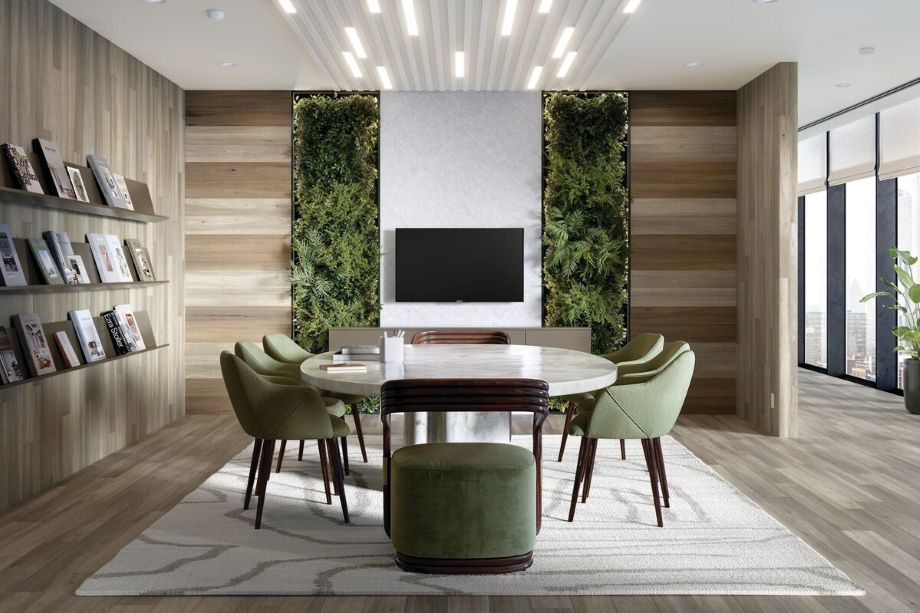
Installing LVT on Walls
When specifying LVT for walls, a few requirements are non-negotiable:
- Thickness: 2.5 mm glue-down LVT is the correct specification for vertical applications. Thicker, rigid-core, and floating-format products are engineered for floors and will not adhere reliably to vertical surfaces.
- Fire performance: Healthcare, hospitality, and education projects frequently require ASTM E84 Class A compliance for wall materials. Confirm code requirements before specifying.
- Surface prep and adhesive: The substrate must be clean, dry, flat, and structurally sound. Use manufacturer-approved adhesives designed for vertical applications.
Nod to Nature® USA, for example, is available in a 2.5 mm option with ASTM E84 Class A certification. That makes it a natural fit for floor-to-wall installations in regulated commercial environments.
Commercial LVT by Sector: What Each Environment Prioritizes
Commercial luxury vinyl tile flooring performs well across a wide range of building types, but specification priorities shift by sector. Here’s what each environment typically demands most.
| Sector | Top Priority | Key Specification Points |
| Healthcare | Infection control, cleanability | Chemical resistance, seamless joints, high indent resistance |
| Education | Impact resistance, durability | Heavy wear layer, scratch resistance, easy maintenance |
| Workplace | Acoustics, aesthetics, comfort | Comfort underfoot, biophilic visuals, low-VOC materials |
| Hospitality | Visual appeal, moisture resistance | Realistic wood/stone visuals, waterproof system, transitions |
| Retail | Traffic durability, wayfinding | Heavy wear layer, zoning capability, pattern flexibility |
Knowing which sector you’re specifying for shapes every decision that follows:
- Wear layer
- Finish
- Embossing depth
- Installation method
- Visual direction of the collection
A floor specified for a hospital corridor and one specified for a corporate lounge are not the same product decision, even if both carry a wood-look visual.
Sustainability: What Actually Matters in LVT
Sustainability in commercial flooring is no longer optional. It’s part of the specification process.
LEED projects, healthcare construction standards, and institutional procurement requirements increasingly ask specific questions about material health, indoor air quality, and environmental impact.
Material Health
Products that avoid ortho-phthalates and heavy metals address the indoor air quality concerns most commonly raised in healthcare and education specifications. FloorScore® certification, for example, indicates a product has been independently tested for VOC emissions relevant to indoor air quality.
These aren’t premium features; they’re baseline expectations on a growing share of commercial projects.
Durability as a Sustainability Argument
A floor that lasts 15 to 20 years requires fewer replacements than one that cycles out in five. Longevity reduces the flooring system’s embodied carbon over the building’s life.
That’s the sustainability argument that’s underused in commercial LVT conversations. The most sustainable floor is often the one that doesn’t require replacement for years and years.
Domestic Manufacturing and End-of-Life
Domestically manufactured products reduce transportation-related carbon emissions and support supply chain transparency. Both often appear in sustainability scorecards for commercial projects.
At the end of life, LVT isn’t widely recyclable through standard channels. Some manufacturers offer take-back programs. For projects where the fate of end-of-life material is part of the brief, it’s worth asking the manufacturer directly before the product is specified.
Maintenance and Lifecycle Cost: The Full Financial Picture
The first cost shows up on the specification sheet. Lifecycle cost shows up over the next 10 to 15 years. That’s where most flooring decisions are actually judged.
Different flooring types approach lifecycle cost differently. Some prioritize lower upfront cost with higher ongoing maintenance. Others prioritize durability and reduced maintenance over time.
The right choice depends on how the space is used, how often it’s cleaned, and how long it needs to perform without disruption.
Key Considerations When Specifying Commercial Vinyl Flooring
| Cost Factor | What to Consider |
| Initial Cost | Material and installation |
| Maintenance | Cleaning routines, labor, and materials |
| Downtime | Impact of maintenance on daily operations |
| Durability | Wear over time based on use. |
| Replacement Cycle | Expected lifespan in space |
What to Look for When Specifying Commercial LVT
A strong commercial LVT specification answers one question clearly: will this floor perform in this environment over time?
| Specification Factor | What to Evaluate |
| Wear Layer | Confirm the mil thickness against the environment’s traffic demands. 20 mil is the baseline for heavy commercial use. |
| Surface Finish | Ask specifically about scratch, scuff, and stain resistance, as well as the routine maintenance the finish requires. |
| Indent Resistance | In spaces with rolling equipment, furniture, or concentrated loads, this is a primary spec point. Look for less than 2% residual indent. |
| Core Construction | Confirm the product meets the installation method and traffic type of your project. |
| Installation Method | Glue-down is generally preferred for demanding commercial environments where dimensional stability matters. |
| Cleanability | Simpler maintenance protocols reduce long-term cost and preserve appearance. No-wax, no-strip products are preferable. |
| Material Health | Products that avoid phthalates and heavy metals support healthier occupied environments. Look for FloorScore certification. |
| Domestic Availability | Lead time and service reliability affect project scheduling more than most spec sheets acknowledge. |
A specification that aligns with real use conditions will always outperform one that looks good on paper.
Commercial Luxury Vinyl Installation: Getting It Right From the Start
A well-specified product can underperform in a poorly installed system. Installation deserves the same attention as the material itself. With commercial LVT, early decisions determine how the floor performs over the next 15 years.
Essential Installation Considerations
Full-spread glue-down installation remains the dominant choice for demanding commercial environments.
A floor bonded directly to the substrate resists movement under rolling loads, furniture, and continuous foot traffic in a way that floating systems cannot match. It also eliminates the edge lifting and seam separation that can appear in floating installations under heavy use.
Before installation begins, acclimate the product to the jobsite. Maintain stable temperature and humidity conditions before, during, and after installation.
Sudden environmental changes affect both the product and the adhesive, and shortcuts here show up later.
Subfloor preparation is non-negotiable. The substrate must be clean, dry, flat, and structurally sound. New drywall finishing, residual adhesive, and surface contaminants all affect the adhesive bond.
Establish layout lines before you start. Work from the center outward. Apply consistent pressure for full adhesive contact, and respect the cure time before the floor sees traffic or cleaning.
Why Most Commercial Installations Fail
Most commercial LVT failures trace back to one of three causes:
1. Wrong product for the application
2. Inadequate subfloor preparation
3. Incorrect installation method.
Nail all three, and the floor has a long, reliable service life. Shortcut any one of them, and the best product specification in the world will not save the installation.
For more insights, read 7 Common Mistakes in Commercial Flooring Installations.
The Honest Downsides of Commercial LVT
A credible commercial guide has to say this clearly: LVT solves many problems, but not every one of them.
Subfloor Prep Still Matters Completely
Even the best product needs a properly prepared substrate. There’s no shortcut.
Surface Damage Is Possible
Commercial luxury vinyl tile flooring is durable, not indestructible. Dragged sharp objects, certain chemical exposures, and extremely concentrated loads can cause damage.
Damaged Sections Require Replacement vs. Refinishing
Unlike hardwood, LVT can’t be resurfaced, like other resilient products, including Iliad™ VCT. The through-color and pattern construction of VCT means long-term wear is less noticeable. Its abrasion and gouge resistance keep it looking good and make it easy to restore.
If a section of luxury vinyl tile flooring is damaged, the answer is to replace the tile. Matching the LVT’s age to its service life requires planning at the time of initial procurement.
Below-Slab Moisture Can Still Create Problems
LVT resists water. However, the system still needs to address moisture from below. Vapor emission rates, adhesive compatibility, and subfloor moisture testing are non-negotiable in high-risk environments.
Heavy Rolling Loads Require the Right Product
Not every commercial LVT product meets requirements for heavy industrial or medical equipment loads. Confirm the specification against the actual load demands of the space, not a general commercial classification.
Why Commercial Designers and Specifiers Keep Coming Back to LVT
Commercial LVT didn’t become the standard because it looks good. It became the standard because it performs.
- It allows designers to create spaces that feel natural, grounded, and intentional.
- It gives facility teams a floor they can maintain without constant intervention.
- It gives owners a surface that performs long after installation.
That’s why it keeps showing up in the spaces that matter most.
Design and Performance for Every Industry
Healthcare wants to feel less institutional. The workplace wants to support comfort alongside productivity.
Hospitality wants the look of natural materials without the fragility. Education needs a floor that can take everything a school day throws at it.
Commercial LVT meets those demands across environments.
That’s why it continues to earn its place.
Explore Commercial LVT From AHF Contract®
AHF Contract delivers durable, high-performance commercial vinyl flooring built to meet the demands of modern commercial interiors. Whether you’re specifying for healthcare, education, workplace, or hospitality, the collections perform where it matters most.
Ready to find the right product for your next project? Use our rep locator to get started or call 1.866.243.2726.
Frequently Asked Questions About Commercial LVT
What does LVT stand for?
LVT stands for Luxury Vinyl Tile. It’s a multi-layered, resilient flooring product engineered to replicate the appearance of natural materials while delivering the durability, moisture resistance, and ease of maintenance required by commercial spaces.
What is the difference between LVT and LVP?
LVT (Luxury Vinyl Tile) refers to square tile formats, while LVP (Luxury Vinyl Plank) refers to long plank formats designed to replicate hardwood. In commercial specifications, both use the same construction technology and performance principles. The distinction is primarily aesthetic.
Is commercial LVT waterproof?
Commercial LVT is manufactured from non-porous vinyl, making it highly resistant to water. A waterproof product does not automatically mean a waterproof system. Seam performance, subfloor moisture, and adhesive selection still affect the full assembly. Plan the system, not just the product.
What is the best installation method for commercial LVT?
For most demanding commercial environments, full-spread glue-down installation provides the best long-term dimensional stability. It’s particularly important in spaces with heavy rolling loads, high foot traffic, and environments where floor movement could create safety or maintenance issues.
How long does commercial LVT last?
With appropriate product selection, correct installation, and consistent maintenance, commercial LVT can last 15 to 20-plus years. Longevity depends on wear layer thickness, finish quality, traffic intensity, rolling load exposure, and maintenance practices.
What is a good wear layer for commercial LVT?
For heavy commercial use, 20 mil is the commonly cited minimum. Products designed for healthcare, education, or high-traffic retail often command higher prices. Confirm wear layer against the specific traffic and load profile of the space, not a general category.
Is commercial LVT sustainable?
It depends on the product and how sustainability is defined. Products that avoid ortho-phthalates and heavy metals, carry FloorScore certification, and are manufactured domestically address the most common sustainability requirements on commercial projects. Durability is also a sustainability argument. A floor that lasts 20 years and avoids early replacement carries a lower lifecycle environmental impact than one that cycles out in five.