
7 Common Mistakes in Commercial Flooring Installations
By AHF Contract® | December 11, 2025
Commercial flooring installation is a serious investment, one where small mistakes can lead to big problems.
The U.S. commercial flooring market was valued at $14.88 billion in 2024 and is projected to reach $34.34 billion by 2033, growing at a CAGR of 10.67%. Globally, it exceeds $137 billion, spanning healthcare, education, retail, and office environments.
That scale raises expectations: flooring must look beautiful, perform flawlessly, and last for years. Yet even premium materials can fail when installation steps are overlooked.
“Most flooring issues trace back to controllable factors. When preparation, product selection, and installation work together, the results speak for themselves.”
Jeremy Lakeman, Technical Service Manager at AHF™.
At a Glance: Common Installation Pitfalls
Whether you’re planning a renovation or managing new construction, understanding where flooring projects most often go wrong can save time, money, and reputation.
The chart below highlights the most common mistakes commercial flooring teams encounter—and the best ways to avoid them.
| Common Mistake | Resulting Issue | Prevention Tip |
| Wrong flooring system | Premature wear or failure | Match the material and underlayment to the environment |
| Poor subfloor prep | Warping or cracking | Test and level before install |
| Skipping acclimation | Gapping or curling | Let materials adjust 24–48 hrs |
| Wrong adhesive | Bubbling or lifting | Follow manufacturer specs |
| Ignoring gaps/layout | Buckling or misalignment | Plan spacing & layout precisely |
| Early installation | Dust or finish damage | Wait for HVAC & sealed space |
| Neglecting care | Shorter lifespan | Include a maintenance plan |
1. Choosing the Wrong Flooring System for the Space
The first mistake often happens before installation even begins: choosing the wrong product for the environment.
A healthcare corridor, classroom, or retail store all have unique requirements for traffic, moisture, and maintenance. Selecting the wrong commercial flooring or pairing it with an improper underlayment can lead to early wear, delamination, or acoustic issues.
For example, a hospital corridor exposed to disinfectants and rolling loads needs a seamless, stain-resistant sheet flooring system. By contrast, a retail store might perform best with durable LVT that balances design flexibility and easy maintenance.
How to Match Flooring to Your Commercial Space
To avoid this mistake, evaluate both function and aesthetics before specifying materials:
- Foot traffic and durability: High-traffic areas such as corridors, cafeterias, and lobbies demand durable products with heavy-duty wear layers.
- Moisture and chemical exposure: Areas that face regular cleaning, disinfecting, or chemical spills, such as healthcare, lab, or restroom spaces, perform best with seamless flooring that resists moisture penetration.
- Design and branding: Color, pattern, and texture can influence mood and reinforce brand identity. Wood- or stone-look floors add warmth and elegance, while bold patterns can energize retail or educational environments.
- Budget and maintenance: Compare the initial installation cost to long-term maintenance costs. Durable coatings, such as EverNu™ on AHF Contract®’s Nod to Nature® USA LVT, help reduce upkeep and extend lifecycle value.
When flooring design and performance align with space function, the result is a solution that’s both durable and visually consistent with the project’s goals.
2. Inadequate Subfloor Preparation and Inspection
A floor is only as strong as what’s beneath it. An uneven, damp, or contaminated subfloor can compromise adhesion and lead to costly failures. Proper subfloor preparation creates a stable, smooth, and clean foundation that allows commercial flooring to perform as designed.
When subfloors aren’t adequately prepared, end users often see long-term problems: visible seams or gaps, premature wear, excessive noise, and even safety issues from trip hazards.
Moisture left unaddressed can cause adhesive failure, mold growth, or delamination. Prevention costs far less than remediation.
Why Subfloor Preparation Matters
- Ensures a level surface: Commercial flooring requires a flat, even substrate to avoid telegraphing imperfections. Small bumps or dips can transfer through resilient materials, creating visible irregularities.
- Prevents damage and buckling: A subfloor that isn’t properly cleaned, leveled, or primed can cause the flooring to warp or release under stress.
- Controls moisture: Moisture vapor emission is a leading cause of flooring failure. Testing and mitigation keep the environment within the manufacturer’s tolerances.
- Improves durability and longevity: A well-prepared subfloor supports uniform wear, reduces stress on adhesive bonds, and extends the floor’s lifespan.
- Enhances safety and acoustics: A stable, secure substrate minimizes movement, squeaks, and vibration in high-traffic areas.
Best Practices for Subfloor Testing and Preparation
- Perform moisture testing (ASTM F2170 for in-situ RH or F1869 for calcium chloride) to confirm levels are within product tolerance.
- Verify surface flatness per ASTM F710. Most resilient flooring requires no more than 1/8-inch deviation over 10 feet.
- Measure alkalinity (pH), usually 7 to 9 for adhesives and resilient flooring systems.
- Document cracks, contamination, and old adhesive residue that may interfere with bonding.
- Where moisture exceeds tolerance, use a mitigation system that meets ASTM F3010 standards before installation.
If readings are out of range, defer installation until conditions meet spec or mitigation is complete.
Require a complete subfloor report before installation begins, including moisture, pH, and flatness data. These readings protect your specification and ensure warranty compliance.
3. Skipping Material Acclimation
Acclimation is one of the most straightforward yet most overlooked steps in commercial flooring installation. However, it’s one of the most important for long-term performance.
It allows flooring materials to adjust to the room’s specific temperature and humidity before installation, preventing post-installation movement that can cause gapping, curling, or seam failure.
When flooring is not acclimated, materials can expand or contract after installation as they equalize to the environment. That movement often results in visible gaps, uneven seams, or even bond failure. Each of these concerns can compromise the floor’s integrity and void the manufacturer’s warranty.
Why Acclimation Matters
- Prevents expansion and contraction: Resilient flooring materials react to changes in temperature and humidity. Acclimation helps them reach a stable moisture balance before adhesive application.
- Ensures dimensional stability: The goal is to achieve equilibrium moisture content (EMC), a steady state in which the flooring, adhesive, and subfloor are balanced with ambient conditions.
- Protects appearance and performance: Proper acclimation reduces the risk of visible gapping, curling, or grout misalignment in modular products.
- Validates warranties: Most commercial flooring manufacturers require documented acclimation to maintain warranty protection.
How to Acclimate Flooring
- Deliver materials directly to the installation site and store them in the room where they will be installed.
- Maintain consistent environmental conditions: 65–85 °F and 35–55% relative humidity for at least seven days before and after installation.
- Keep cartons sealed and stacked flat until ready to install, allowing air circulation around them.
- Allow at least 48 hours of acclimation time for resilient flooring (longer in humid or cold conditions).
- Use a moisture meter or infrared thermometer to confirm that the subfloor and ambient conditions match the manufacturer’s requirements before installation begins.
Proper acclimation is more than a procedural step. It’s a warranty safeguard and a key to preventing expensive callbacks or replacements.
4. Improper Adhesive Selection or Application
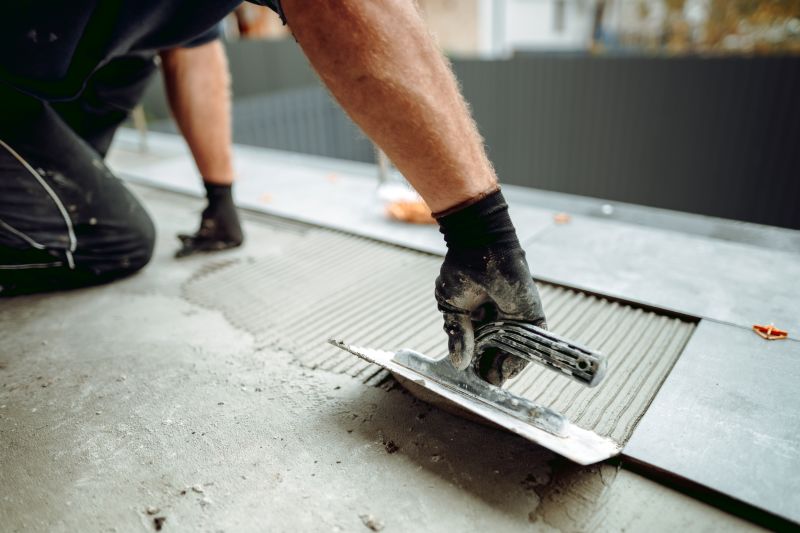
Even the best materials can fail when adhesives are mismatched or misapplied. Each flooring type has a recommended adhesive chemistry (pressure-sensitive, wet-set, or epoxy-based) designed to bond with its specific backing.
Adhesive performance depends heavily on job-site conditions.
Temperature and Humidity Impact Adhesive Cure Time
Temperature is the most significant variable. Below about 65 °F (18 °C), cure rates slow dramatically, sometimes doubling for every 10–15 °F drop in temperature.
The industry rule of thumb is that for every 18°F decrease in temperature, the cure time doubles. Cold substrates extend open time, delay curing, and weaken cohesive strength (AstroChemical).
Conversely, warmer environments within the 75–85 °F range promote faster and stronger bonds. That’s providing the adhesive doesn’t exceed the manufacturer’s maximum temperature tolerance.
Humidity also matters, particularly for moisture-cure and acrylic systems, since excessive moisture can trap vapors or cause premature skinning.
Cold floors or low temperatures can extend open time and weaken bond strength, so always follow the manufacturer’s recommended cure schedule and limit traffic accordingly.
Installer Guidelines for Commercial Flooring
- Use manufacturer-approved adhesives and trowel notches (for example, a 1/16-inch square notch for most LVT installations).
- Maintain ambient temperatures between 65° F and 85° F with relative humidity of 40–60%.
- Follow open time and working time instructions, usually 10 to 30 minutes, to achieve optimal tack.
- Roll the floor in both directions with a 100-pound roller immediately after installation to ensure a complete bond.
“Adhesive chemistry and timing work hand in hand. Too wet, and materials shift. Too dry, and you lose cohesive strength. The installer’s precision determines long-term bond integrity.”
Jeremy Lakeman, Technical Service Manager at AHF™.
Review the Manufacturer’s Documentation
Installers should always consult the manufacturer’s documentation before choosing or applying adhesives.
AHF Contract, for instance, provides detailed commercial specification guidelines to support proper installation:
- Installation instructions
- Test reports
- Specification sheets
- Maintenance recommendations
These resources outline approved adhesives, trowel sizes, and conditions needed for a successful installation.
Most resilient flooring adhesives used with LVT, VCT, and sheet vinyl are acrylic-based formulations that allow limited moisture vapor emission. Still, installers should always verify compatibility with concrete treatments or primers.
5. Ignoring Expansion Gaps and Poor Layout Planning
Expansion gaps are small but essential for the long-term performance of resilient flooring. Without them, materials can buckle, curl, or delaminate as they expand and contract with changes in temperature and humidity.
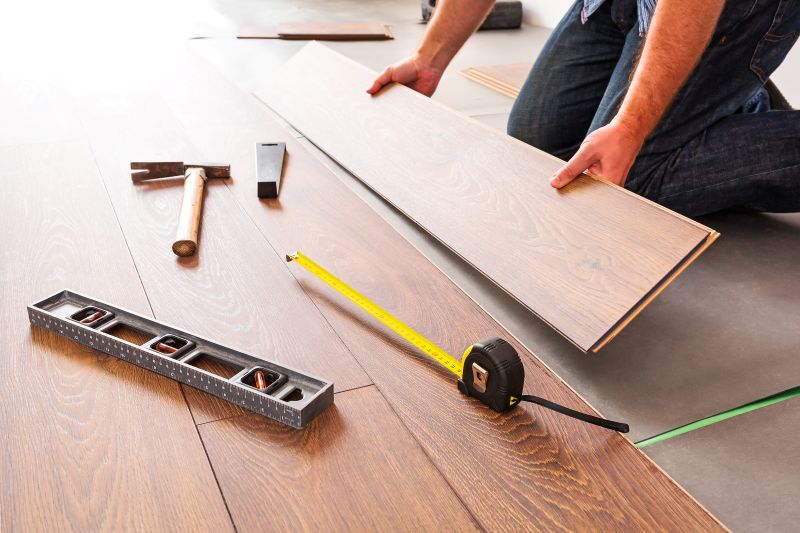
In resilient flooring, such as LVT, VCT, and sheet vinyl, a ¼-inch perimeter gap around all walls and fixed objects (columns, door frames, pipes) is typically recommended. This space allows the flooring to move naturally with environmental fluctuations.
In high-temperature zones or areas exposed to direct sunlight, a slightly wider gap may be needed to accommodate thermal expansion.
What Happens When Gaps Are Missed
When expansion gaps are overlooked, several types of damage can occur:
- Buckling or warping: Heat exposure or direct sunlight can cause vinyl to expand and push upward, especially near windows or HVAC vents.
- Shrinkage gaps: Low humidity or cold conditions can cause contraction, creating visible seams where dirt or moisture can collect.
- Noise and adhesive stress: Tight installations can cause creaking, popping, or even adhesive bond failure as the floor strains against walls and fixtures.
- Aesthetic and safety concerns: Gaps left uncovered can trap debris or create trip hazards.
Gaps should also be maintained around built-ins and cabinetry, not just at the perimeter of the room. These spaces are later concealed by wall base or trim, leaving a clean, finished appearance. Always account for furniture clearance and door swing to prevent flooring from binding or compressing at contact points.
“Expansion management is part of system design. A small allowance around the edges prevents large-scale movement across the floor.”
Jeremy Lakeman, Technical Service Manager at AHF™.
6. Installing Too Early or Without Environmental Controls
Flooring should be among the final stages of construction. Installing before HVAC systems are running or before the building envelope is sealed exposes materials to unpredictable temperature and humidity swings that compromise performance.
Environmental controls must be in place and maintained before, during, and after installation. Without them, installers risk adhesive failure, material expansion or contraction, surface defects, and even voided warranties.
Align your flooring installation schedule with other finish trades and verify that environmental systems are operational before the flooring crew mobilizes. These conditions protect your specification and ensure a high-quality, warranty-compliant installation.
Common Issues When Conditions Aren’t Controlled
- Adhesive failure: Inconsistent temperature or humidity prevents adhesives from curing properly, leading to a weak or incomplete bond.
- Dimensional change: Resilient flooring can expand or contract when exposed to moisture or heat, causing buckling, warping, or gapping.
- Surface defects: Vinyl and other coated materials can bubble, curl, or discolor if condensation forms on the surface during installation.
- Warranty loss: Most flooring manufacturers specify environmental ranges in their installation guides; ignoring them can void both material and labor warranties.
Key Environmental Conditions
| Factor | Recommended Range | Why It Matters |
| Temperature | 65° F–85° F (18° C–29° C) | Ensures proper material acclimation and adhesive curing. |
| Relative Humidity (RH) | 35%–55% for resilient flooring | Prevents excessive expansion, contraction, and moisture imbalance. |
| Subfloor Moisture | Must meet ASTM F2170/F1869 and manufacturer limits (typically <80% RH or <5 lbs MVER) | Avoids trapped moisture, mold, and adhesive failure. |
| Dew Point | Surface temperature must be ≥5°F above the dew point | Prevents condensation that can cause poor adhesion or surface haze. |
Best Practices for Environmental Control
To maintain stable site conditions and ensure warranty compliance, follow these best practices:
- Ensure the permanent HVAC system is running for at least 48–72 hours before and after installation to stabilize temperature and humidity. If not yet available, use temporary climate control equipment.
- Confirm that flooring materials and adhesives have acclimated in the controlled space for a minimum of 48 hours.
- Use digital hygrometers and moisture meters to verify temperature, humidity, and subfloor moisture readings before installation, and document them for warranty compliance.
- Maintain consistent conditions after installation to allow adhesives to cure fully and materials to stabilize.
7. Neglecting Post-Installation Protection and Maintenance
Even flawless installations can fail without proper protection and maintenance.
During construction, new floors should be protected from damage with heavy-duty coverings, such as Ram Board, until turnover.
After occupancy, consistent care is essential to maintain the floor’s performance, safety, and appearance.
Why Maintenance Matters
Regular maintenance is vital for safety, longevity, and a professional image. Daily cleaning removes abrasive dirt and grit that can scratch or dull resilient flooring, while prompt spill cleanup prevents staining or adhesive breakdown.
Long-term, a consistent maintenance program extends product life, reduces replacement costs, and preserves warranty coverage.
Safety and Health
A consistent maintenance program protects both people and property in several ways:
- Prevents slips and falls: Removing dirt, debris, and moisture reduces the risk of slips and falls and liability exposure.
- Improves indoor air quality: Regular vacuuming and damp mopping capture dust, allergens, and bacteria that can accumulate on floors, creating a healthier workplace.
- Maintains hygiene: In healthcare, educational, and food service spaces, proper cleaning prevents the buildup of germs and supports infection control protocols.
Longevity and Cost Savings
Regular care also helps preserve flooring performance and reduce long-term costs:
- Extends floor life: Grit and sand act like sandpaper underfoot; routine cleaning prevents surface abrasion that shortens product lifespan.
- Protects finishes: Periodic polishing or recoating maintains protective layers, which guard against stains and scratches.
- Reduces replacement costs: Routine care defers major capital expenses by maximizing floor life cycles.
Include maintenance and protection protocols in the closeout documentation. Always refer to the manufacturer’s maintenance recommendations to ensure long-term performance and warranty coverage.
What Architects and Designers Can Do
Architects and designers play a crucial role in avoiding these common mistakes:
- Require subfloor reports, moisture readings, and acclimation documentation before installation.
- Verify installer certifications and product training.
- Specify adhesives, underlayments, and environmental tolerances in your construction documents.
- Review and distribute manufacturer technical documentation, including installation guides, product test reports, and maintenance instructions, to ensure every team member works from the same standard.
Finally, help your clients connect with experienced, qualified installers. The best flooring specification can fail if the quality of installation doesn’t match the product.
Partner with a commercial flooring contractor who understands manufacturer requirements, job-site preparation, and post-installation care.
For guidance on selecting the right professional, read How to Hire a Commercial Flooring Contractor.
Getting It Right from the Ground Up
Nearly every flooring failure shares one thing in common: it was preventable. With proper product selection, preparation, and installation coordination, commercial spaces can achieve beautiful, long-lasting results.
“Installation is both a science and an art. When handled correctly, it elevates design into performance that endures.”
Jeremy Lakeman, Technical Service Manager at AHF™.
AHF Contract is committed to helping commercial teams avoid costly installation errors. Our resilient flooring collections, such as LVT, VCT, and sheet vinyl, are supported by detailed installation instructions, adhesive specifications, and testing standards that simplify complex jobs and protect your investment.
For architects, designers, and installers alike, AHF Contract provides the expertise, documentation, and durable flooring solutions needed to ensure every installation performs beautifully.
Talk to an AHF Contract rep by calling 1-866-243-2726. Or use our locator to find a rep, distributor, or contractor near you.