
LVT on Walls: Capitalizing on a Growing Commercial Design Trend
April 15, 2026 | By AHF Contract® Flooring Experts
LVT is moving beyond the floor.
Designers now use Luxury Vinyl Tile (LVT) on walls when 2.0–2.5 mm glue-down products, proper adhesives, and approved installation methods are specified.
In commercial interiors, it’s quickly becoming a go-to solution for vertical applications where durability, cleanability, and visual continuity matter.
What started as a creative workaround has evolved into a deliberate design strategy.
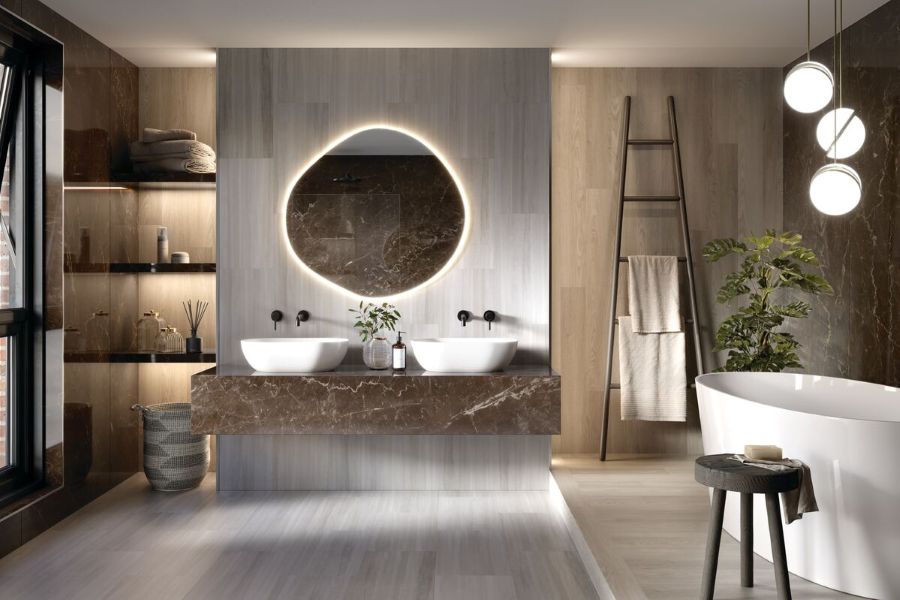
From Floors to Walls
Commercial designs now frequently extend LVT from floors to walls, creating cohesive environments that perform well in real-world conditions. In healthcare, hospitality, workplace, and retail settings, that shift is driven by one simple need: materials that hold up over time without limiting design flexibility.
But it also introduces complexity.
Vertical installations require disciplined specification. Product construction, adhesive compatibility, substrate preparation, and fire performance all determine whether the installation succeeds or fails.
LVT Remains a Popular Flooring Solution
LVT is expanding rapidly because it combines durability, cost efficiency, and design flexibility in a single material.
The global LVT market is projected to grow from $23.78 billion in 2023 to $43.74 billion by 2031, with an expected CAGR of 8.8 percent (Source: Yahoo!Finance).
That growth isn’t driven by aesthetics alone.
LVT delivers the visual appeal of wood, stone, and other natural materials while offering water resistance and low maintenance. It performs in environments where traditional materials struggle.
As expectations for performance increase, designers are naturally extending that same material to vertical surfaces.
Why Designers Are Moving LVT Up the Wall
Designers use LVT on walls to improve durability, simplify maintenance, and create cohesive floor-to-wall environments.
In high-traffic commercial settings, walls experience constant contact. Equipment, carts, cleaning cycles, and daily use all contribute to wear.
Traditional wall finishes can’t handle that level of stress.
LVT provides an alternative.
“Performance materials are no longer limited to the floor. When we extend LVT onto walls, we’re creating spaces that are easier to maintain, more durable, and more cohesive from a design standpoint.”
— Oxana Dallas, Principal Designer, Commercial, AHF™
What are the Benefits of Installing LVT on Walls?
Installing vinyl flooring on walls delivers durability, moisture resistance, design flexibility, and long-term value in commercial environments.
It’s not just a design upgrade. It’s a performance upgrade.
Durability in High-Traffic Environments
LVT protects walls from scuffs, scratches, and impact in high-contact areas.
In commercial interiors, walls are constantly exposed to carts, equipment, and repeated contact.
Paint chips. Wallcoverings tear. Drywall dents.
Glue-down LVT creates a protective surface that maintains its appearance over time, especially in corridors, patient rooms, retail environments, and public spaces.
Moisture Resistance for Demanding Spaces
LVT provides a water-resistant surface that performs in high-moisture and frequently cleaned environments.
That makes it a strong solution for:
- Healthcare settings
- Hospitality environments
- Break rooms and cafés
- Backsplashes and bar fronts
Unlike traditional finishes, LVT holds up under repeated cleaning cycles and humidity without degradation.
High-End Aesthetics Without the Tradeoffs
LVT delivers the look of natural materials without the maintenance challenges.
Advancements in high-definition imaging and surface texturing allow LVT to replicate:
- Wood
- Stone
- Concrete
- Abstract materials
The result is a refined, high-end appearance that performs in environments where real materials may not be practical.
Design Flexibility Across Applications
LVT allows for creative wall applications that support both branding and spatial design.
Designers can:
- Create feature walls and focal points
- Extend flooring visuals vertically
- Introduce patterns such as herringbone or stacked layouts
- Define zones within open environments
Collections like Nod to Nature™ 2.5 mm LVT from AHF Contract® bring natural wood visuals into commercial spaces while maintaining durability and ease of maintenance.
Long-Term Maintenance and Cost Efficiency
LVT reduces maintenance demands while preserving design quality over time.
Typically, you can clean surfaces with simple, routine methods rather than specialized treatments.
Over time, that translates to:
- Lower maintenance costs
- Reduced material replacement
- Consistent appearance
That’s especially important in high-use environments where downtime and repairs carry real operational costs.
Seamless Design Continuity
LVT enables a consistent material story across floors and walls.
Designers can create continuity by extending the same visual vertically or by introducing contrast using coordinated materials.
That flexibility supports:
- Brand identity
- Wayfinding
- Cohesive interior design
Performance Doesn’t Stop at the Floor
Commercial LVT products deliver scratch, scuff, and stain resistance, as well as fire performance, that carry over into vertical applications.
For example, Nod to Nature features EverNu™ finish, engineered to improve surface durability in high-use environments.
That matters on walls just as much as floors.
Vertical surfaces in commercial spaces are frequently cleaned, touched, and exposed to impact. Materials must hold up under those conditions.
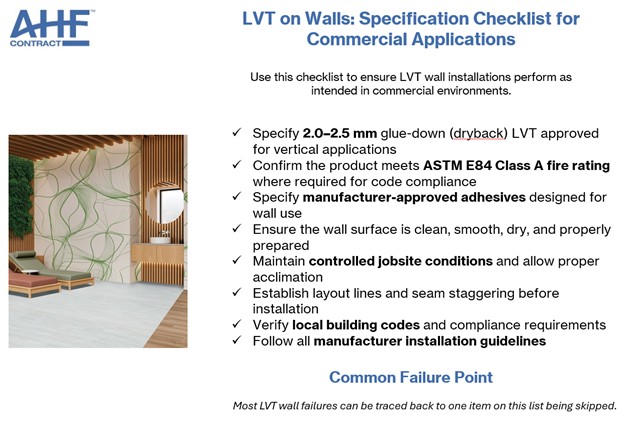
Do LVT Wall Installations Need to Meet OSHA Requirements?
LVT used on walls in commercial spaces must comply with applicable building codes, fire standards, and workplace safety regulations.
However, it’s important to understand what that actually means.
LVT itself isn’t “OSHA-approved” as a product. Instead, compliance is determined by how the material performs and how you installed it in a commercial environment.
Fire and Code Compliance Comes First
For wall applications, LVT is considered an interior finish, which brings fire performance into focus.
Products must meet recognized standards such as:
- ASTM E84 (Class A preferred) for flame spread and smoke development
- Local building and fire codes, which may vary by jurisdiction
In regulated environments like healthcare, education, and hospitality, these requirements are non-negotiable.
Installation Practices Must Meet Safety Standards
While building codes govern the materials, OSHA standards govern how the work is performed, including
- Proper handling of adhesives and materials
- Safe removal of existing wall coverings
- Managing exposure to dust, silica, or hazardous materials when applicable
These considerations are especially important in renovation projects.
Material Safety and Indoor Air Quality
Commercial specifications often include requirements beyond basic code compliance.
These may involve:
- Low-emitting materials for indoor air quality
- Restrictions on certain chemical components
- Compliance with broader environmental or health standards
Product selection and documentation typically addressed these factors.
Manufacturer Guidelines Still Matter Most
Even with code and safety considerations, one rule overrides everything else:
Always follow manufacturer-approved guidelines for vertical applications.
That includes:
- Approved product types (2.0–2.5 mm glue-down LVT)
- Recommended adhesives
- Installation methods
Failure to follow these guidelines can lead to performance issues, warranty concerns, and compliance risks.
“Material performance doesn’t stop at the floor. When properly specified, LVT can meet the durability, cleanability, and fire performance requirements needed for vertical applications in commercial environments.”
— Olga Rivas, Sr. Research Scientist, AHF Products™
How to Install LVT on Walls in Commercial Spaces
LVT is installed on walls using a glue-down method with manufacturer-approved adhesives, proper surface preparation, and controlled jobsite conditions.
While the process is straightforward, successful installations depend on precision at every step.
Start With Proper Surface Preparation
Wall preparation is the most critical step in the installation process.
Surfaces must be:
- Clean and free of dust or contaminants
- Smooth and level
- Dry and structurally sound
Remove paint, wallpaper, and residual adhesives. In many cases, priming is required to ensure proper bonding.
If the substrate isn’t right, the installation won’t perform.
Establish Layout and Alignment
Accurate layout ensures a consistent, professional appearance.
Before installation begins:
- Mark level reference lines
- Determine starting point (typically from the base)
- Plan seam placement and pattern direction
This step is especially important for patterned installations such as herringbone or linear layouts.
Use Approved Adhesives for Vertical Applications
You should only use manufacturer-approved adhesives designed for wall applications.
These adhesives provide:
- Immediate grab to prevent slippage
- Long-term bond strength
- Compatibility with LVT construction
Improper adhesive selection is one of the most common causes of failure in vertical installations.
Install From the Bottom Up
Insall LVT starting at the base of the wall and working upward.
Each plank or tile should be:
- Properly aligned
- Firmly pressed into the adhesive
- Checked for consistent spacing and layout
Applying consistent pressure ensures full adhesive contact across the surface.
Maintain Proper Seam Staggering
Staggered seams improve both appearance and installation integrity.
End joints should be offset to avoid visible repetition and to create a more natural, balanced look across the wall.
Condition Materials and Jobsite
LVT must be acclimated and installed in a controlled environment.
Before installation:
- Allow materials to adjust to room temperature
- Maintain stable temperature and humidity conditions
Environmental fluctuations can affect both adhesive performance and material stability.
Allow Proper Cure Time
Adhesives require time to bond fully.
After installation:
- Avoid cleaning or loading the surface too soon
- Follow manufacturer guidelines for cure times
This process ensures long-term performance and prevents early failure.
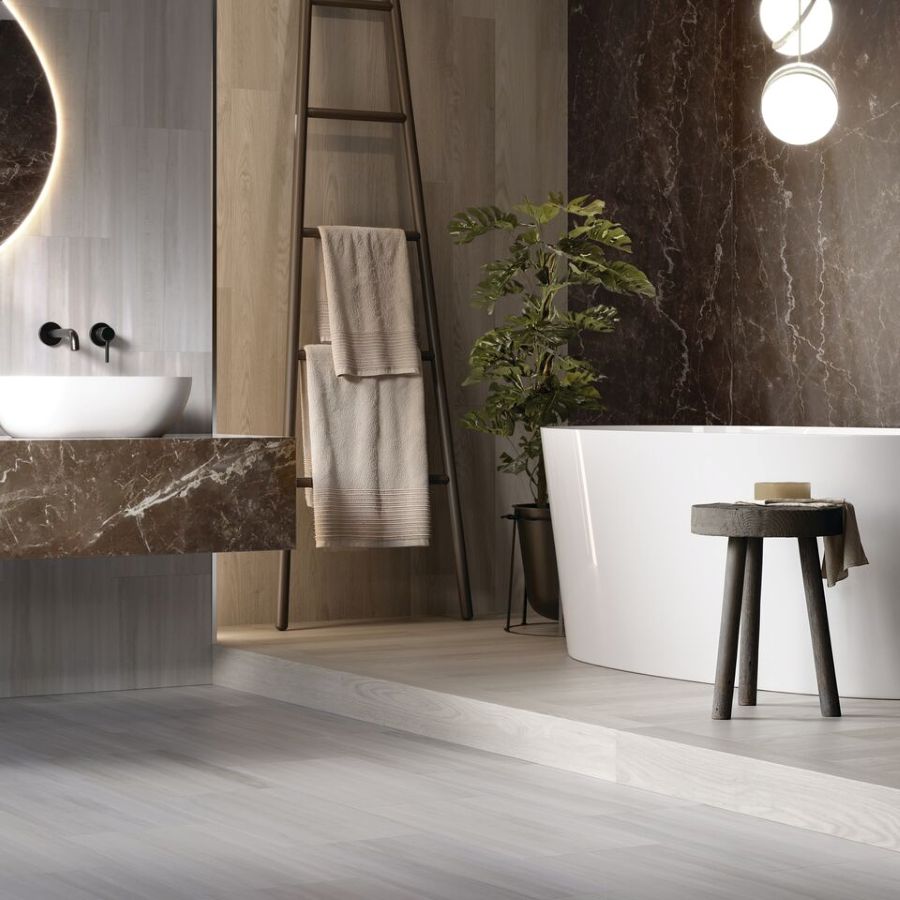
What are Common Mistakes When Installing LVT on Walls?
Poor surface preparation, incorrect adhesives, or using products not designed for vertical applications cause most LVT wall failures.
The material itself is rarely the issue. Installation is.
Using the Wrong Product Type
One of the most common mistakes is specifying products designed for floors rather than walls.
Rigid-core and click-lock LVT products rely on floating installation systems. They don’t provide full adhesion and can shift or detach over time.
For wall applications, always use 2.0–2.5 mm glue-down (dryback) LVT approved for vertical use.
Using the Wrong Adhesive
Adhesive selection is critical for vertical installations.
Using the wrong adhesive, or applying it inconsistently, can lead to:
- Slippage during installation
- Delamination over time
- Uneven bonding across the surface
Walls require aggressive, manufacturer-approved adhesives designed specifically for vertical applications.
Skipping Proper Surface Preparation
Adhesive performance depends entirely on the substrate.
Installing over ill-prepared surfaces will compromise the bond and cause failure. That includes surfaces that are:
- Dusty
- Uneven
- Painted or contaminated
- Not properly primed
Walls must be clean, smooth, dry, and structurally sound before installation begins.
Failing to Establish Layout and Alignment
LVT installations are highly visible on walls.
Without proper layout planning:
- Seams may align unnaturally
- Patterns can appear inconsistent
- The entire installation can look off-balance
Establishing layout lines and starting with a level base row ensures a consistent, professional result.
Poor Seam Staggering
Seam placement affects both aesthetics and perceived quality.
When joints are aligned or poorly staggered, the installation can appear repetitive or structurally weak.
A consistent offset pattern improves both visual balance and overall design quality.
Ignoring Environmental Conditions
Always install LVT in a controlled environment.
Failure to acclimate materials or maintain stable temperature conditions can lead to:
- Movement after installation
- Gapping or stress on seams
- Adhesive performance issues
Always follow manufacturer guidelines for conditioning materials and maintaining jobsite conditions.
Ultimately, most failures with LVT on walls don’t come from the material. They come from how it’s specified and installed.
Where Are the Best Places to Use LVT on Walls in Commercial Buildings?
LVT performs best on walls in high-traffic, high-contact, and moisture-prone commercial environments where durability and cleanability are critical.
That’s where it delivers the most value.
Not every wall needs LVT. But in the right applications, it solves problems that traditional finishes can’t.
Feature Walls and Branded Environments
LVT is widely used to create feature walls that combine visual impact with durability.
In hospitality, retail, and corporate settings, vertical LVT can anchor a space while reinforcing brand identity.
Hotel lobbies, reception areas, and retail environments often use LVT to introduce texture, warmth, or contrast without sacrificing performance.
Unlike decorative panels or wallcoverings, it holds up under constant use.
High-Traffic Corridors and Wall Protection
LVT protects walls in areas exposed to repeated contact and impact.
Corridors in healthcare facilities, schools, and commercial buildings experience constant movement from people, carts, and equipment.
You can use LVT as:
- Full wall cladding
- Wainscoting systems
- Chair rail protection zones
In these environments, it functions as both a design element and a protective surface.
Bar Fronts and Service Areas
LVT performs well in hospitality environments where durability and moisture resistance are essential.
Bar fronts, service counters, and café areas face exposure to:
- Spills
- Cleaning chemicals
- Frequent contact
LVT provides a durable, easy-to-maintain surface that maintains its appearance over time.
Break Rooms, Restrooms, and Backsplashes
LVT is effective in areas exposed to humidity and routine cleaning, but not direct water immersion.
In corporate and commercial environments, it’s often used for:
- Break room walls
- Restroom wall surfaces
- Kitchen and lounge backsplashes
These are areas where traditional finishes can degrade quickly.
LVT provides a more stable, water-resistant alternative when installed correctly.
Workplace and Corporate Interiors
LVT adds warmth and texture to office environments while maintaining durability.
In workplace settings, designers use LVT to:
- Create accent walls in conference rooms
- Define zones within open spaces
- Introduce natural materials without added maintenance
Here’s where collections like Nod to Nature™ 2.5 mm LVT stand out, bringing biophilic design into environments that still demand performance.
Key Considerations Before Specifying LVT on Walls
Successful applications depend on proper specification, not just location.
Before using LVT on walls, always confirm:
- The product is approved for vertical use
- Fire performance meets ASTM E84 Class A requirements
- Proper preparation of the substrate
- Manufacturer-approved adhesives are specified
LVT will often highlight imperfections in the wall surface, so preparation is critical.
Where Should You Avoid Using LVT on Walls in Commercial Spaces?
Avoid installing LVT on walls in high-heat, continuously wet, or non-compliant environments. That can compromise adhesive performance and material stability.
It performs well in many applications, but not all.
Understanding where not to use LVT is just as important as knowing where it works.
Near High-Heat Sources
Avoid installing LVT near direct or sustained heat.
That includes areas around:
- Commercial stoves and ovens
- Fireplaces or heaters
- Autoclaves or heat-generating equipment
Excessive heat can weaken adhesives, leading to warping, movement, or bond failure over time.
In Direct, Prolonged Sunlight
Extended exposure to direct sunlight can cause fading and material degradation.
In spaces with large windows or intense solar exposure, LVT may:
- Discolor over time
- Lose visual consistency
- Experience thermal movement
In these environments, solar control strategies or alternative materials should be considered.
In Continuously Wet or Poorly Ventilated Areas
LVT is water-resistant, but not designed for constant water exposure.
Avoid using it in:
- Shower enclosures
- Areas with standing water
- Poorly ventilated, high-moisture environments
These conditions can lead to adhesive failure and long-term performance issues.
In High-Impact Zones Without Proper Specification
Using the wrong product in high-impact areas can lead to damage.
While LVT is durable, thin or non-rated products may not withstand:
- Repeated impact from the equipment
- Aggressive cleaning methods
- Heavy-use commercial environments
Proper product selection, including thickness and construction, is critical.
In Areas Requiring Specific Fire or Code Compliance
Don’t install LVT where it doesn’t meet required fire ratings or building codes.
Always verify:
- ASTM E84 Class A rating (when required)
- Local building and fire codes
- Manufacturer approval for vertical applications
Failure to meet these requirements can create compliance risks.
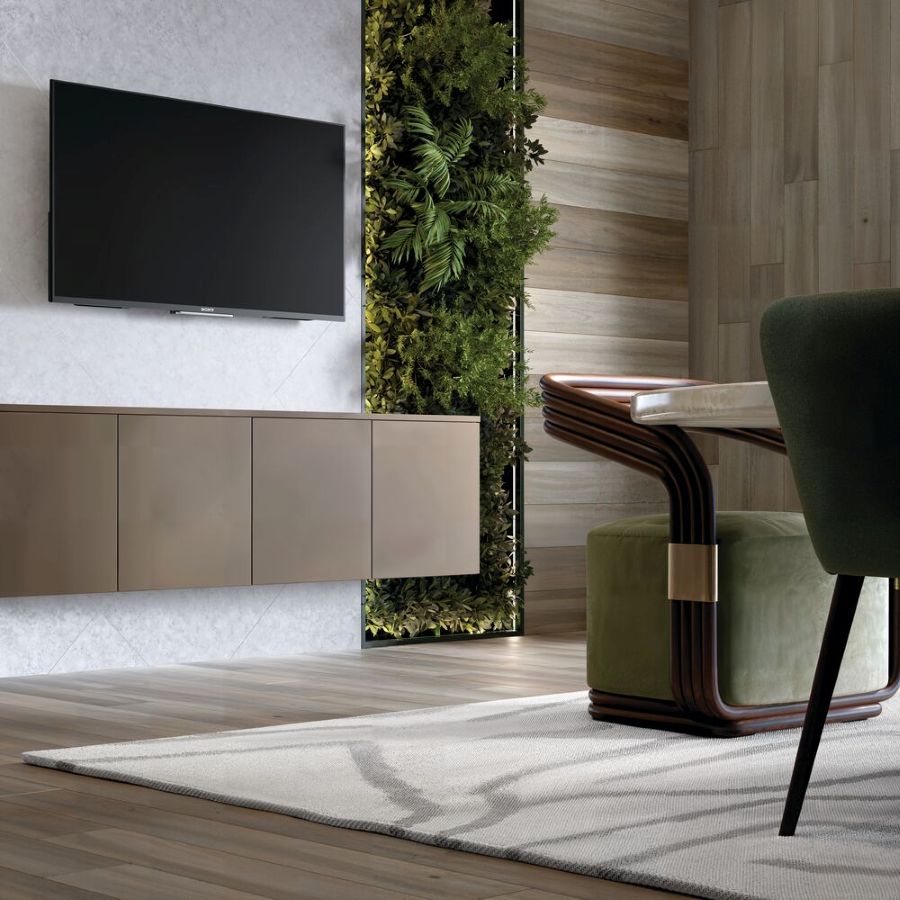
Why Nod to Nature™ 2.5 mm LVT Fits the Application
LVT on walls is no longer a workaround.
It’s a performance-driven design strategy that combines durability, flexibility, and visual cohesion.
Nod to Nature™ 2.5 mm LVT is well-suited for walls because it combines ideal thickness, glue-down compatibility, durability, and natural design.
Its 2.5 mm construction supports proper adhesion. Its visuals introduce warmth and biophilic design into commercial spaces.
And its performance characteristics align with the demands of vertical applications.
Contact an AHF Contract® Representative
Ready to capitalize on this increasingly popular design option? Find an AHF Contract rep near you or call 1.866.243.2726. We’ll show you how to take advantage of installing LVT on walls for more cohesive designs and improved performance.
FAQs: Using LVT on Walls in Commercial Spaces
How do you get vinyl flooring to stick to a wall?
Use glue-down LVT with a manufacturer-approved adhesive on a clean, smooth, dry surface.
What kind of vinyl should you use on walls?
Use 2.0–2.5 mm glue-down (dryback) LVT designed for vertical applications.
Can you use peel-and-stick vinyl flooring on walls?
No. It does not provide sufficient adhesion or long-term performance.
Why won’t my vinyl stick to the wall?
Common causes include poor surface preparation, incorrect adhesive, or using the wrong product.
Can you use LVP on walls?
Most LVP products are not suitable due to their floating installation systems.
How do you prepare a wall for vinyl?
Walls must be clean, smooth, dry, and structurally sound. You might also need to prime the walls.
Is LVT used in high-end commercial spaces?
Yes. LVT is widely used in healthcare, hospitality, and workplace environments.